191
awaiting review
0
approved
0
scheduled
0
published
191
total active
needs your review
scheduled
scheduled
first comment
scheduled
history (1)
AI gets you the first 80% of an app in a weekend. The last 20% still takes months.

I've shipped 20+ web apps in the past couple of years, and the pattern holds every time. The demo is fast. The auth edge cases, the data integrity, the screen nobody screenshots: that's the work.

The bottleneck moved. It didn't disappear.

Plan for the 20% and the weekend demo becomes a product.
259 / 280
first comment
scheduled
134 / 280
first comment
scheduled
first comment
scheduled
first comment
scheduled
scheduled
first comment
scheduled
253 / 280
first comment
scheduled
110 / 280
first comment
scheduled
first comment
scheduled
first comment

scheduled
scheduled
scheduled
first comment
scheduled
first comment
scheduled
231 / 280
first comment
scheduled
117 / 280
first comment
scheduled
scheduled
first comment
scheduled
114 / 280
first comment
scheduled
first comment
scheduled
first comment
scheduled
116 / 280
first comment
scheduled
first comment
scheduled
history (1)
AI can plan your whole week of meals. Here's the actual workflow.

I know, "AI for meal planning" sounds like a product demo. But I spent 12 minutes with one of the workflows on Everyday AI last week and came out with a 7-day meal plan, a grocery list sorted by store section, and three dietary swaps I hadn't thought to ask for.

The reason it works: the workflow gives you the exact prompts to run,…
scheduled
first comment
scheduled
history (1)
A client once paid us for an AI strategy when what they actually needed was a plumber.

Mid-size consumer brand, real budget, genuine urgency. The brief: build us an AI strategy. Leadership wanted a vision, a roadmap, a narrative for the board.

Two weeks of discovery told a different story. Their content operations were the actual bottleneck. Product information lived in four systems that disagre…
113 / 280
first comment
scheduled
scheduled
first comment

scheduled
113 / 280
first comment

scheduled
first comment
scheduled
first comment
scheduled
106 / 280
first comment
scheduled
first comment
scheduled
scheduled
first comment

scheduled
133 / 280
first comment
scheduled
scheduled
first comment

scheduled
history (1)
She held up two packages and asked which one won't kill us. We'd never met.

She wasn't talking to me specifically. Or she was, but we'd just made eye contact in the deli aisle and she'd decided that made me an expert.

I'd been standing there for 45 seconds reading a label. Sodium content, because my doctor had said something two weeks prior that made me nervous, and I was trying to figure out if…
108 / 280
first comment
scheduled
first comment
scheduled
first comment
scheduled
history (1)
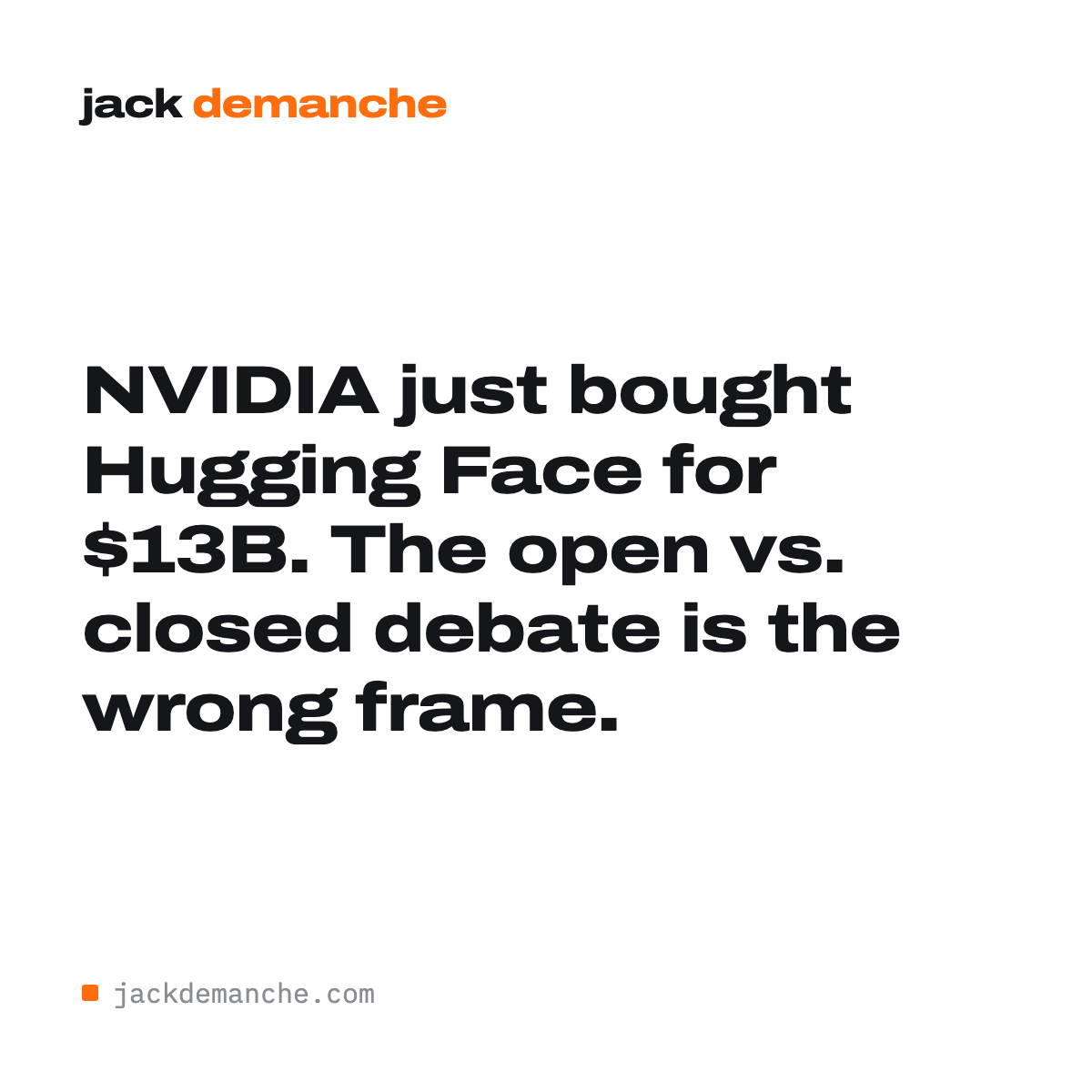
NVIDIA just bought Hugging Face for $13B. The open vs. closed debate is the wrong frame for enterprise AI strategy.

The real question for enterprise teams: who controls your access layer?

Hugging Face wasn't just a model repository. For a lot of teams trying to avoid OpenAI lock-in, it was the neutral ground. The Switzerland of the stack. You could pull models, host workflows, build pipelines, a…
130 / 280
first comment
scheduled
first comment
scheduled
scheduled
first comment
scheduled
137 / 280
first comment

scheduled
scheduled
first comment
scheduled
131 / 280
first comment
scheduled
first comment
scheduled
first comment
scheduled
122 / 280
first comment

scheduled
first comment

scheduled
scheduled
first comment
scheduled
119 / 280
first comment
scheduled
scheduled
first comment
scheduled
124 / 280
first comment
scheduled
first comment

scheduled
first comment
scheduled
117 / 280
first comment
scheduled
first comment
scheduled
scheduled
first comment
scheduled
128 / 280
first comment
scheduled
scheduled
first comment
scheduled
109 / 280
first comment
scheduled
first comment
scheduled
first comment
scheduled
101 / 280
first comment
scheduled
first comment
scheduled
first comment
scheduled
98 / 280
first comment
scheduled
scheduled
first comment
scheduled
102 / 280
first comment
scheduled
first comment
scheduled
first comment
scheduled
105 / 280
first comment
scheduled
first comment
scheduled
first comment
scheduled
114 / 280
first comment
scheduled
scheduled
first comment
scheduled
107 / 280
first comment
scheduled
first comment
scheduled
first comment
scheduled
101 / 280
first comment
scheduled
first comment
scheduled
first comment
scheduled
114 / 280
first comment

scheduled
scheduled
first comment
scheduled
88 / 280
first comment
scheduled
first comment
scheduled
first comment
scheduled
94 / 280
first comment
scheduled
first comment
scheduled
first comment
scheduled
history (2)
I used to hand off first drafts. Now I do them myself — with AI.

Counter-intuitive, right? Tools that automate work made me take back a task I'd delegated for years.

Here's what changed: speed collapsed the context handoff cost.

Before: I'd brief a writer, wait 3 days, get a draft that missed the angle, explain what I meant, wait 2 more days. A week to get something 70% there.

Now: I dump a vo…
Yesterday I teased a piece on AI adoption thresholds. The response that surprised me: everyone wants to know which tasks to start with.

Here's what I actually tell them: start with the task you dread most. Not the biggest one. The one that makes you procrastinate.

For me it was drafting project briefs. Not because they're hard — because the blank page is heavy. Now I dictate a messy voice memo, …
109 / 280
first comment
scheduled
scheduled
first comment
scheduled
102 / 280
first comment
scheduled
first comment
scheduled
first comment
scheduled
101 / 280
first comment
scheduled
first comment
scheduled
first comment
scheduled
history (1)
Last week I shipped three tools for my teams. None of them has a landing page. None of them ever will.

One pulls the client-reporting numbers my team used to request from finance by hand every Friday. It updates itself now and looks better than the deck it replaced.

Another turned a recurring resourcing spreadsheet — the one where three people cross-check who's staffed on what — into a single bu…
107 / 280
first comment
scheduled
scheduled
first comment
scheduled
98 / 280
first comment
scheduled
first comment
scheduled
first comment

scheduled
101 / 280
first comment
scheduled
first comment
scheduled
first comment
scheduled
88 / 280
first comment
scheduled
scheduled
first comment
scheduled
94 / 280
first comment
scheduled
first comment

scheduled
109 / 280
first comment
scheduled
first comment
scheduled
88 / 280
first comment
scheduled
scheduled
first comment
scheduled
94 / 280
first comment
scheduled
first comment
scheduled
109 / 280
first comment
scheduled
first comment
scheduled
94 / 280
first comment
scheduled
scheduled
first comment

scheduled
91 / 280
first comment
scheduled
first comment
scheduled
102 / 280
first comment

scheduled
first comment
scheduled
81 / 280
first comment
scheduled
scheduled
first comment
scheduled
94 / 280
first comment
scheduled
first comment
scheduled
93 / 280
first comment
scheduled
first comment
scheduled
103 / 280
first comment
scheduled
scheduled
first comment
scheduled
103 / 280
first comment
scheduled
199 / 280
first comment
scheduled
201 / 280
first comment
scheduled
scheduled
history (1)
this week's reset is about the gap between what ai can do and what you'll actually use it for.

most tutorials skip the uncomfortable part: these tools have real limitations that matter for real work. not because they're "not advanced enough yet," but because the limitations aren't technical—they're about you.

this email: three ways to spot what's actually possible vs. what's hype, and one concre…
247 / 280
first comment
scheduled
scheduled
scheduled
scheduled
scheduled
scheduled
scheduled
scheduled
scheduled
scheduled
scheduled
scheduled
scheduled
approved — queued
nothing approved yet — review the queue above